Hydrophyllum virginianum
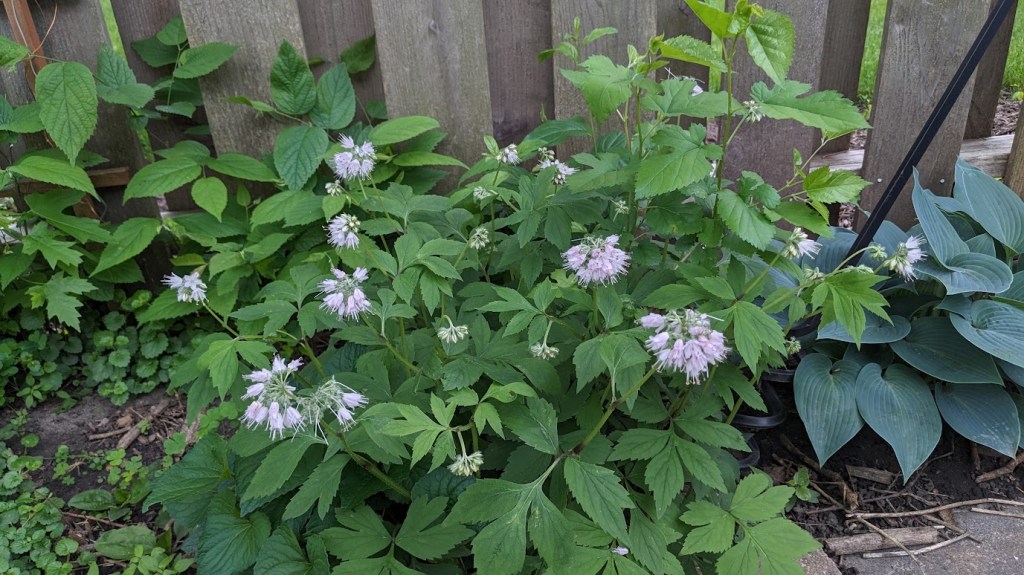
I’ll be honest—when this spring flower first showed up on my property, I thought it was a weed. Its unassuming leaves popped up in the shady corners of my yard, and I was ready to pull them out. But something about it made me pause. Maybe it was the white “water spots” on the leaves, or maybe I just got distracted. Either way, I let it stay. And I’m so glad I did.
That “weed” turned out to be Virginia Waterleaf, one of the first wildflowers to find its home in my yard. Once I realized it wasn’t some invasive nuisance, I decided to let it volunteer wherever it pleased. It seemed happiest along the edges of my garden beds, where the shade met the sun. Over time, I grew to love its subtle charm—those pale purple, bell-shaped flowers that bloom in late spring and the way the bumblebees can’t resist climbing in and out of the blossoms. Watching them buzz around has become one of my favorite springtime rituals.
What Makes Virginia Waterleaf Special?
For one, it’s a native perennial, which means it’s perfectly adapted to your garden if you live in the eastern or midwestern U.S. It thrives in shady, moist spots and doesn’t need much care. The leaves are a deep green with splashes of white that look like water stains—hence the name. When it blooms, usually in late May or early June, the flowers form clusters of soft lavender or pale blue, and they’re absolutely irresistible to pollinators.
Plant Facts
| Height | 1 to 2 feet |
| Spread | 1 to 2 feet |
| Bloom Time | Late May to early June |
| Light | Shade to part sun |
| Soil | Moist, rich in organic matter |
A Plant with History
Virginia Waterleaf has been around long enough to weave itself into the lore of its native habitats. Some Native American tribes used the plant medicinally, brewing teas from the roots to treat digestive issues. Its leaves were even called “Shawnee Salad” because they’re edible when young, though I’ll admit I haven’t tried that myself—I’m more of an admirer than a forager.
Tips for Growing and Enjoying
- Let It Volunteer: Virginia Waterleaf is happiest in those in-between spaces—garden edges, woodland paths, or the borders of shady beds. It doesn’t ask for much, so you don’t need to fuss over it.
- Pollinator Magnet: If you want to support bees, this plant is a winner. Bumblebees, in particular, love crawling into the flowers, and it’s a joy to watch.
- Easy Maintenance: This plant can spread through rhizomes, so keep an eye on it if you don’t want it taking over. That said, it plays well with others and doesn’t overwhelm its neighbors.
Why I Love It
What I love most about Virginia Waterleaf is how it surprises me. It’s not showy like some other wildflowers, but it has a quiet beauty that sneaks up on you. And every spring, when those delicate flowers open up and the bumblebees come to visit, I’m reminded why I let this “weed” stay all those years ago. It’s a small, effortless piece of nature that connects my garden to the wild world beyond my fence, and for that, I’ll always make room for it.
 Iowa Native Gardener