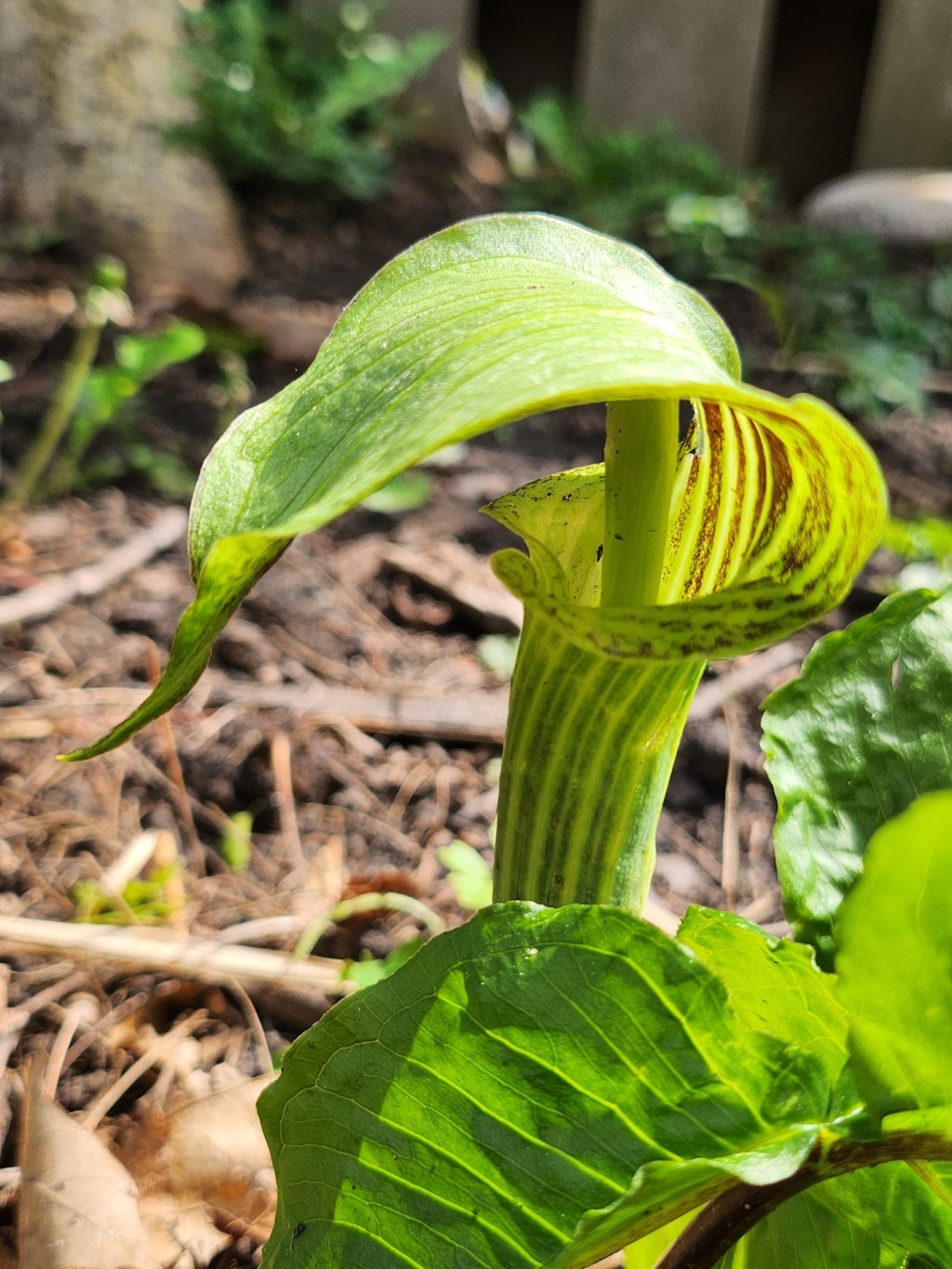
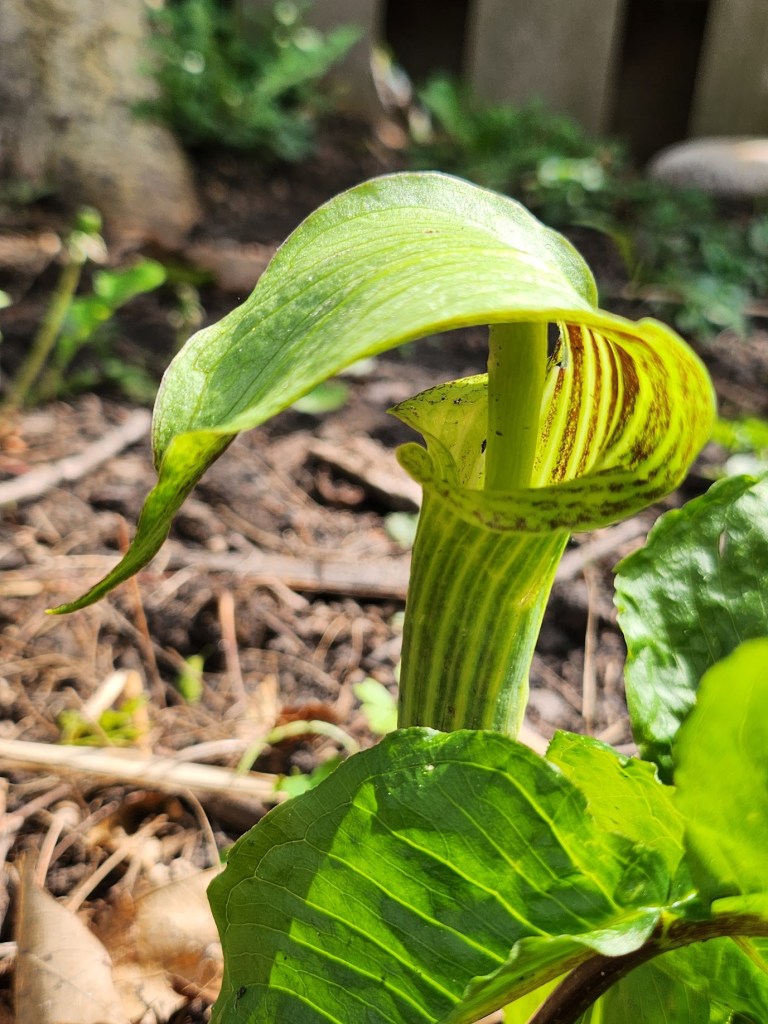
Jack-in-the-Pulpit has long held a place in Native American traditions. The plant was used medicinally, but only with great care, as its raw form contains calcium oxalate crystals, which can cause a burning sensation if ingested. Stories and names tied to this plant often reflect its unique appearance, with “Jack” referring to the spongy cylindrical structure standing in the protective “pulpit” of its rolled, leaf-like bloom.
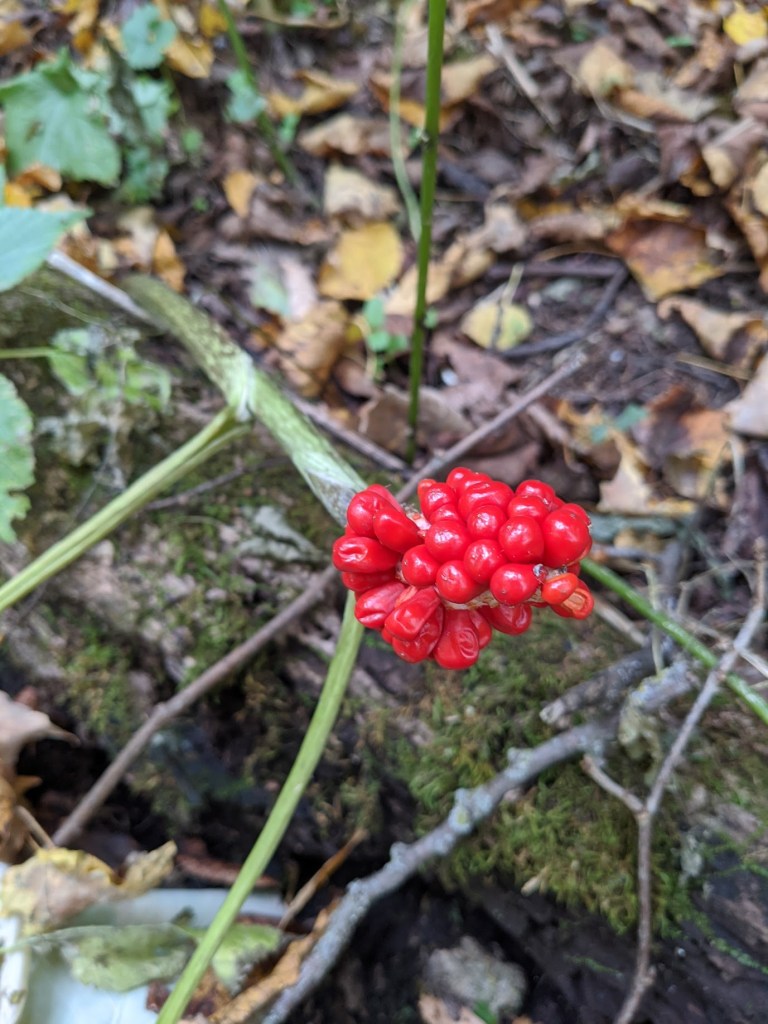
Its bright red berries, which ripen in late summer, have also inspired wonder and lore. While the berries are toxic to humans, they are an important food source for birds, who help disperse the seeds across the forest floor.
Why Add Jack-in-the-Pulpit to Your Garden?
Jack-in-the-Pulpit is a great addition to your woodland garden. Here’s why:
- Unique Appearance: The striped blooms are one-of-a-kind, adding intrigue to shaded areas.
- Seasonal Interest: The flowers emerge in spring, followed by clusters of glossy red berries that brighten the woodland floor in late summer and fall.
- Wildlife Value: The berries are a food source for birds, and the plant is largely left alone by herbivores due to its peppery, burning taste.
- Rich History: This plant carries a deep connection to the woodlands of North America and the traditions of the people who lived here long before us.
Care and Growing Tips
Jack-in-the-Pulpit is an adaptable plant but thrives best in rich, shaded, seasonally wet soil:
- Light Preferences: Partial shade to full shade.
- Soil Needs: Medium-wet to medium-dry soil. Enrich the soil with organic matter for best results.
- Height: Reaches up to 2 feet tall, perfect for understory plantings in a woodland garden.
- Propagation: Sow fresh seeds in the fall outdoors for high germination rates the following spring.
Plant Facts:
| Color | Green |
| Bloom season | Spring |
| Height | 2’ |
| Soil Preference | Medium-Wet, Medium, Medium-Dry |
| Light Preference | Partial, Shade |
Jack-in-the-Pulpit is more than just a plant—it’s a connection to the woodland ecosystems that once dominated the Midwest. With its curious blooms, bright berries, and rich cultural ties, it’s an excellent choice for creating a garden that feels both magical and meaningful.
Here’s to celebrating the history, wildlife, and beauty of Jack-in-the-Pulpit in our native gardens!
 Iowa Native Gardener