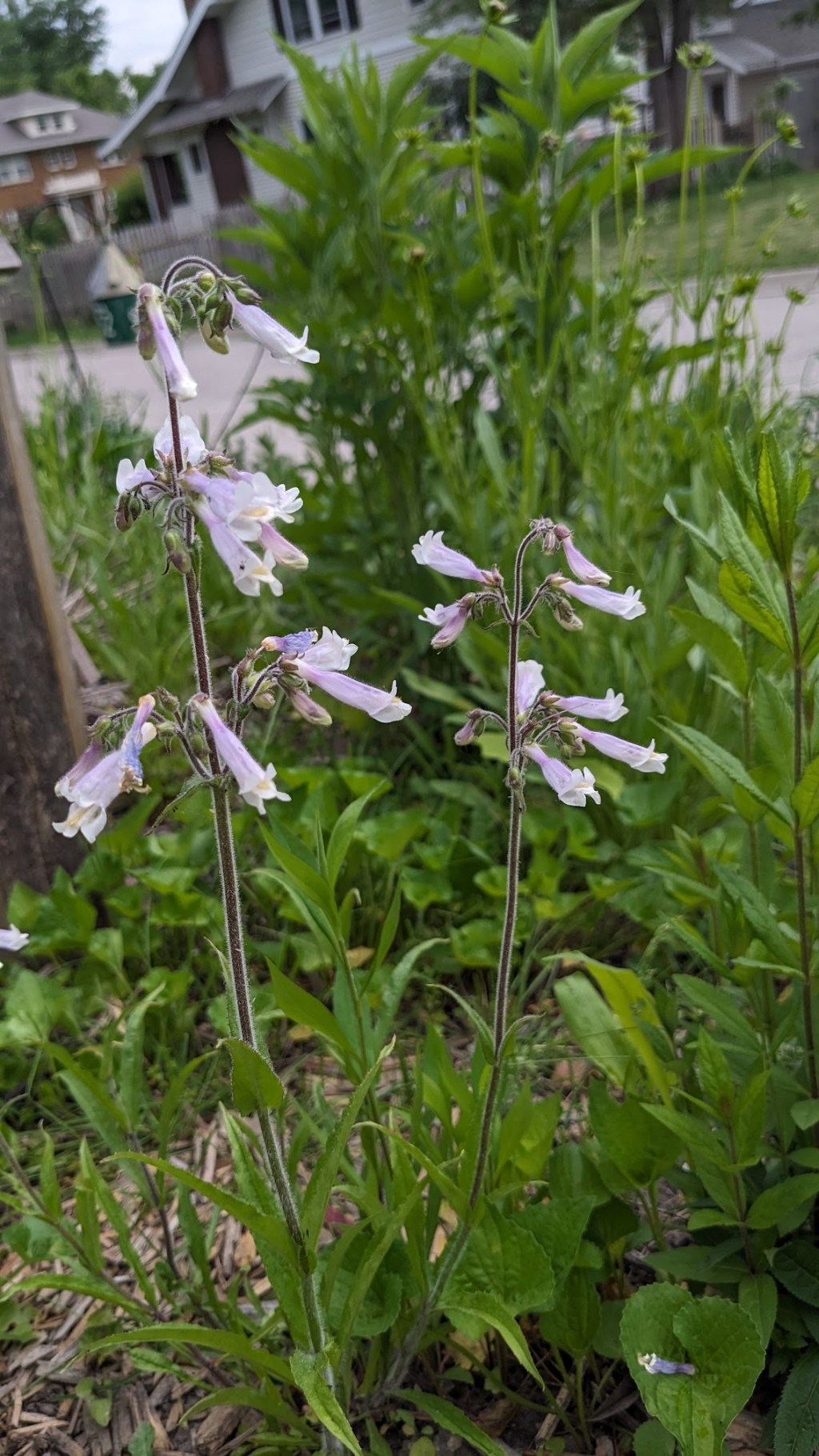
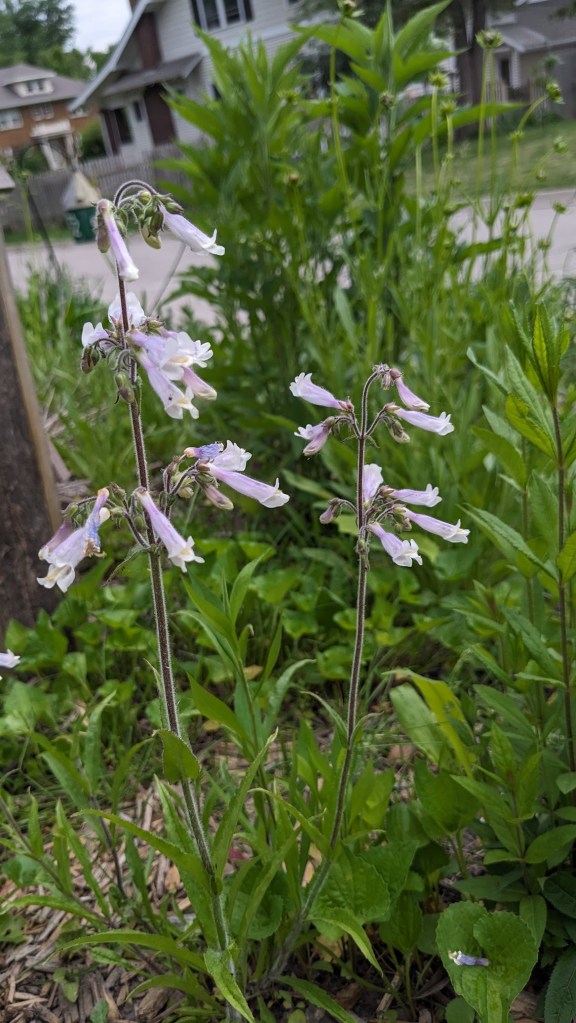
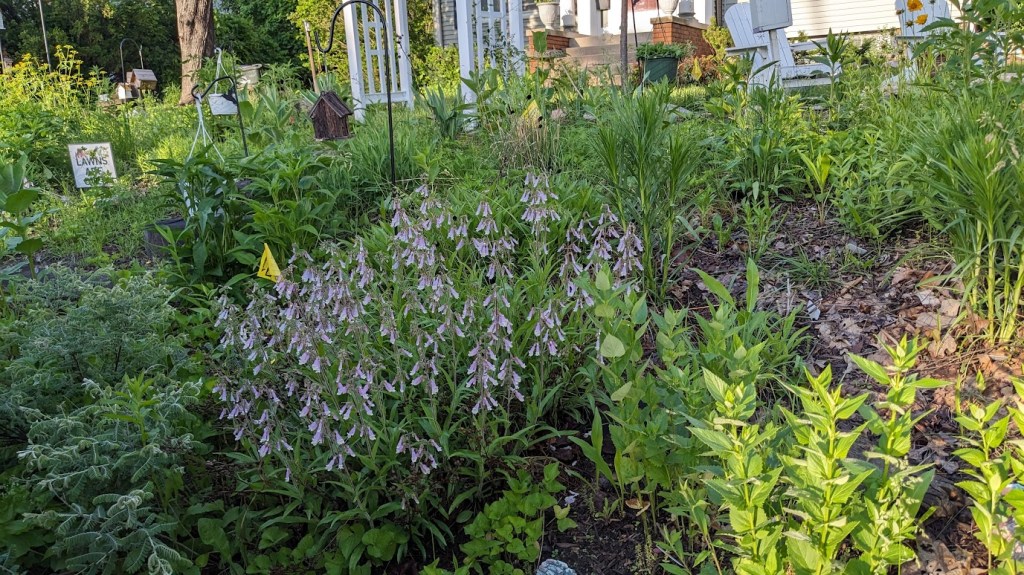
Hairy Beardtongue has been a joy in my garden, thriving happily on my west-facing slope. It’s always buzzing with activity, as big, fuzzy bees seem unable to resist its trumpet-shaped flowers. The blooming season is remarkably long, and last fall, it even surprised me with a second wind of blooms. Few plants give so much throughout the year!
A Pollinator Magnet
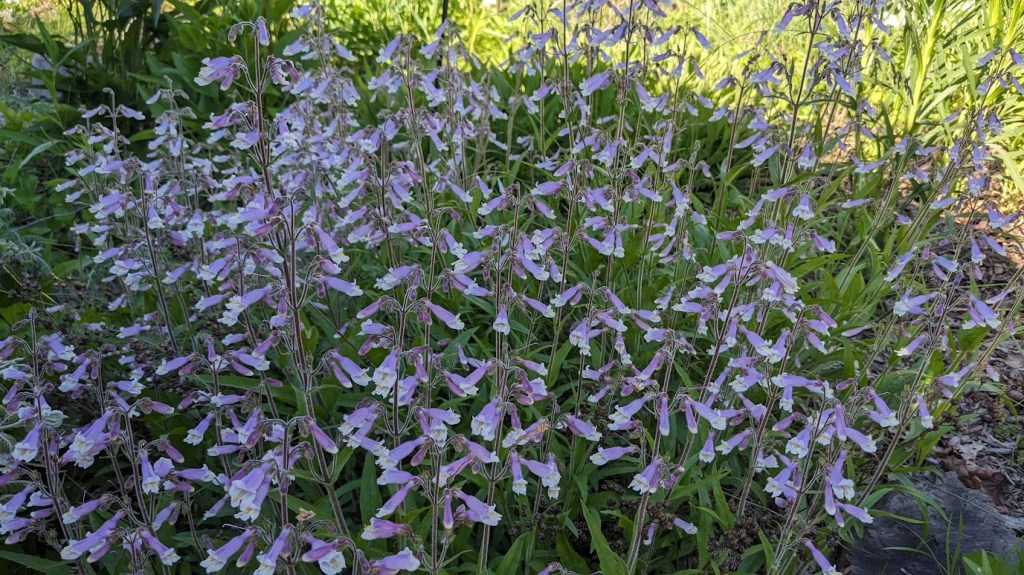
Hairy Beardtongue, also known as Northeastern Beardtongue, is a versatile native plant that offers beauty and ecological value. From late May through late June, clusters of lavender, pale purple, or even white flowers appear, attracting bumblebees, butterflies, and hummingbirds.
Its early bloom time and unique hairy stems set it apart from other Beardtongues, while the distinctive protruding, hairy lower lip of its flowers gives this species its common name.
Why Choose Hairy Beardtongue?
This adaptable plant is a perfect addition to any native garden:
- Pollinator Paradise: Bumblebees, butterflies, and hummingbirds love the trumpet-shaped blooms.
- Long Blooming Season: Its flowers last from spring into early summer, with the possibility of a second round of blooms in the fall.
- Versatile Growth: Thrives in a wide range of soil types, from medium-wet to dry, and tolerates varied sun conditions, including full sun, partial shade, and even full shade.
- Compact and Charming: Reaching 1–2 feet tall, it’s ideal for borders, slopes, or prairie plantings.
Plant Facts:
| Color | Pink |
| Bloom season | Spring |
| Height | 18” |
| Soil Preference | Medium-Wet, Medium, Medium-Dry, Dry |
| Light Preference | Full, Partial, Shade |
Planting Hairy Beardtongue is a surefire way to add beauty and biodiversity to your garden. Its cheerful blooms, pollinator-friendly nature, and adaptability make it a standout choice for native landscaping.
Here’s to another season of fuzzy bees and vibrant flowers! 🌸🐝
 Iowa Native Gardener