Sweet violets
Sweeter than the roses
Covered all over from head to toe
Covered all over in sweet violets
–written and composed by J. K. Emmet, 1882

It’s spring, and spring brings violets, the bane of the well-tended lawn. Even some die-hard native plant enthusiasts despise them–call them weed and curse at the sight of them.
Common blue violets are a rhizomatous clumping annual. They’re native to eastern and central North America. The flowers and leaves are edible, and it’s been used medicinally for millennia to heal wounds and treat inflammation.

I never understood the distaste for them. They’re low-growing, thrive in shade, but do okay in full sun. They make an excellent ground cover. They provide essential pollen early in the season. And the endangered American bumblebee that’s been putting on an airshow in my yard the past few days seems to approve.
My neighbor has a lawn service, and one day I wandered over to ask the driver what was in the brew they were about to dump on the lawn. I was curious what they used that merited all the hazard signs. Meanwhile, I think the gentleman saw it as an opportunity to sell me on their service.
“Why, it’s a special blend we made just for them, based on their needs. Glyphosate, bensulide, dithiopyr. With added triclopyr. You know, for the violets.”
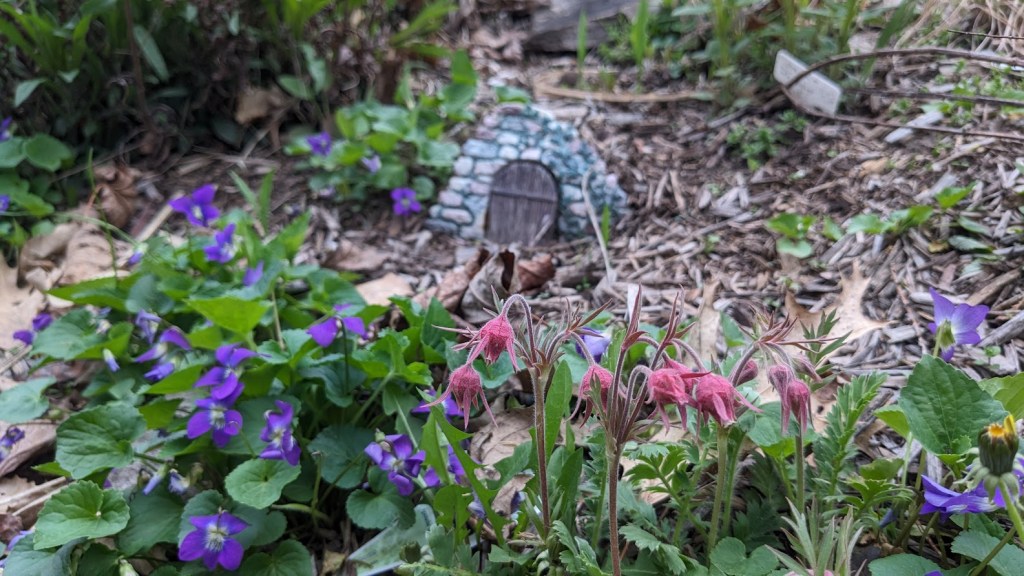
Violets are the only host plant for fritillary butterflies. Without violets there would be no leopard spotted Edward’s Fritillary, no ombre-winged Great Spangled Fritillary, no autumn-rainbow Variegated Fritillary and no Coronis Fritillary with stained glass wings to rival any cathedral.
Fritillaries are my favorite butterfly. Or maybe it’s the black swallowtails. Or common buckeye. Or the monarchs, or perhaps the clever viceroy. Okay, they’re all my favorite. But today, it’s fritillaries.
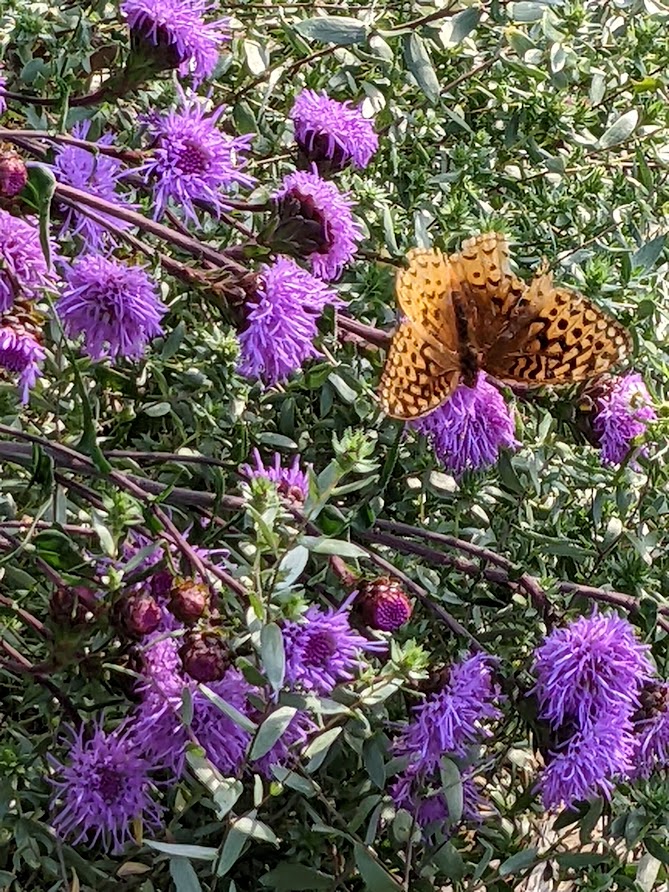
Once a year, fritillary females lay their eggs. They search prairie and yard, seeking those places where violets will grow in spring. Their eggs overwinter, tucked in safely under a blanket of leaves. In spring, the caterpillars emerge to be nourished and protected by those violets, and the cycle begins again.
How could you despise a plant that does that? The violet, humble and low-growing, serving eons of larval fritillaries and their butterflies. And butterflies, well they are simply the most magical of creatures. I digress, but could there be anything more lovely than a kaleidoscope of butterflies laughing across a summer meadow?
Some complain violets spread too much, and overrun precious garden space where other, more deserving native plants belong.
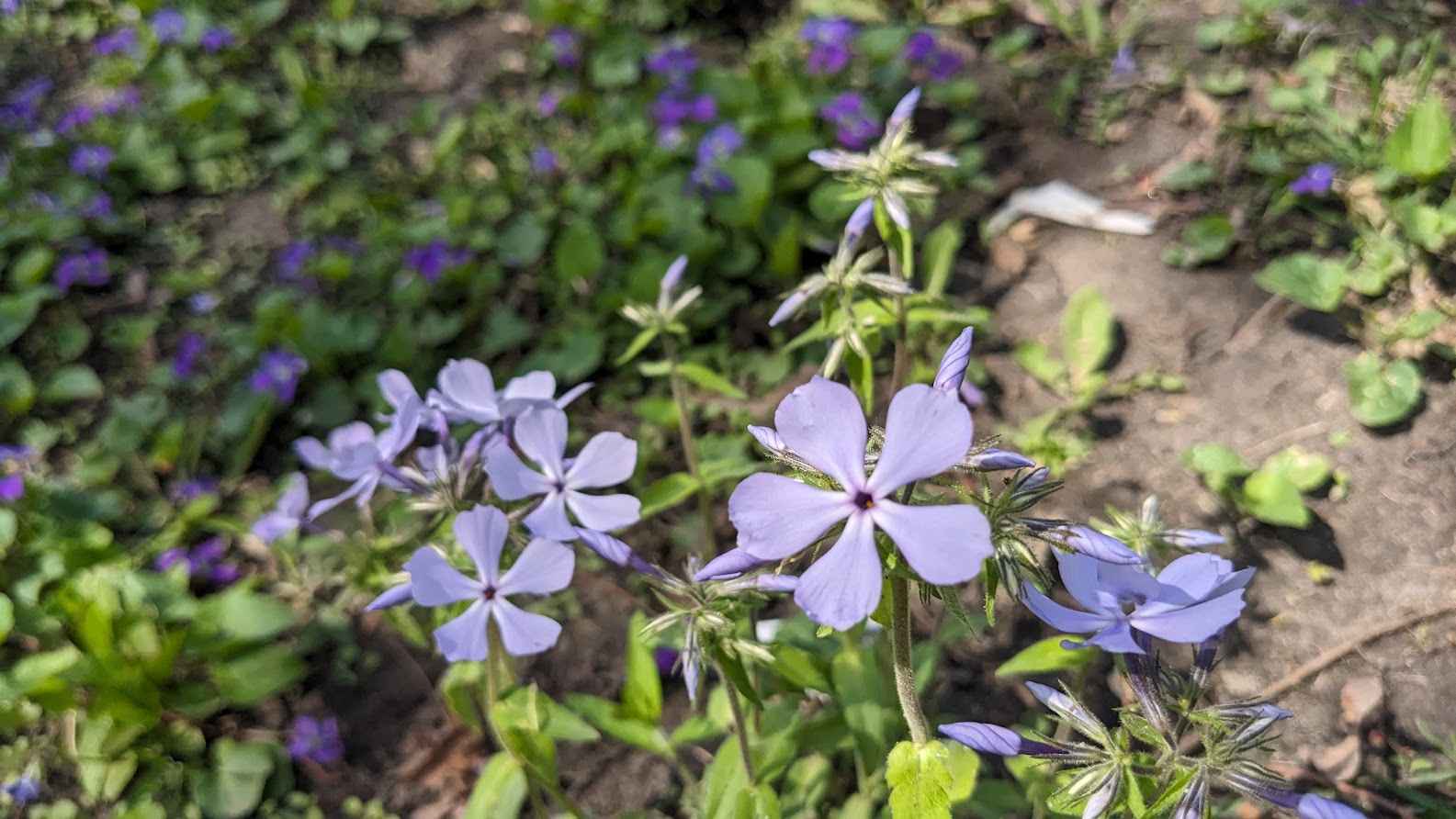
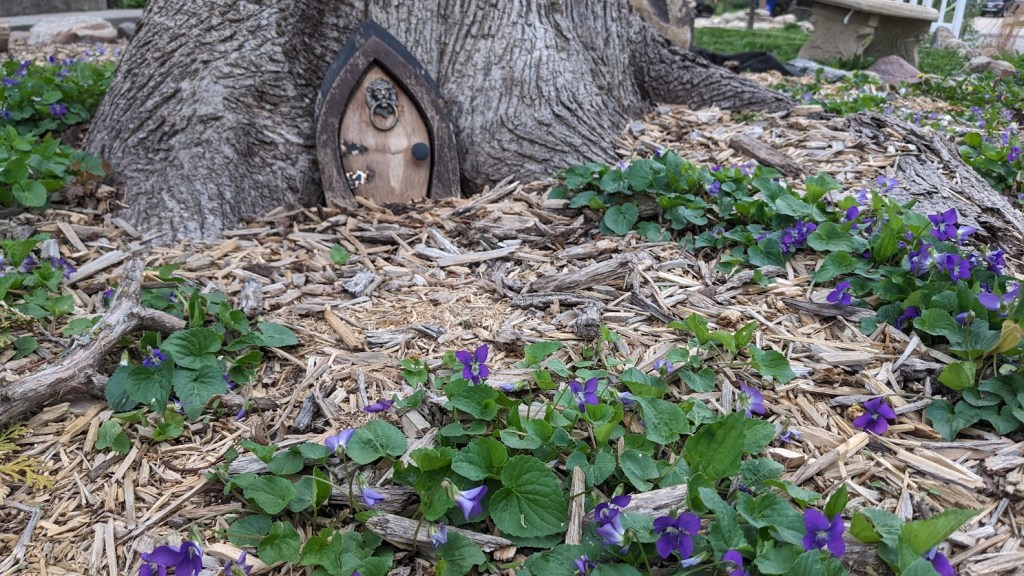
It hasn’t happened in my yard. My violets are quite well-behaved, except for the few that dare to venture onto the toxic ecological wasteland of my neighbor’s lawn. My violets saunter in the shade and lounge around the borders, but politely give way as the bearers of May blooms green up to seize the light. The violets shrink as their bloom subsides, but the green persists all three seasons in places where I can use the ground cover. They are quite content to play the corps in the summer symphony of my lawn.
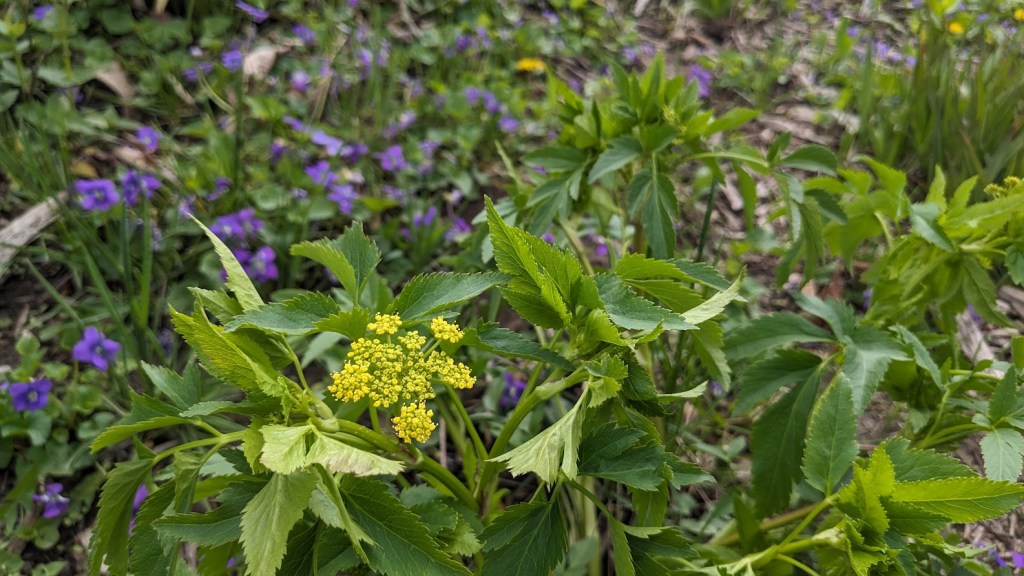
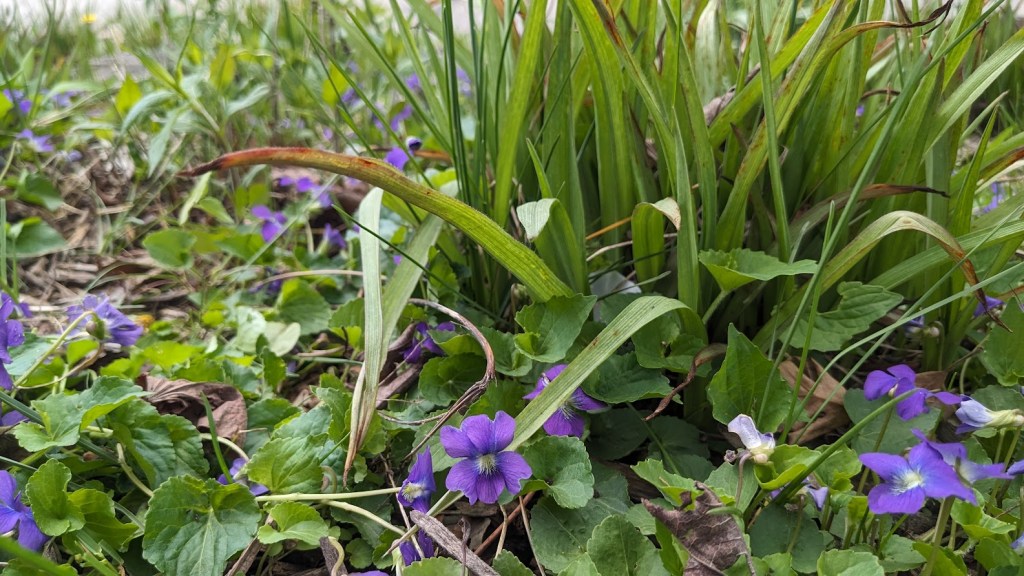
I am of the mind that some plants are prone to good behavior in some yards, but may run amok in others. So when people tell me they hate violets because they take over, who am I to argue?
But me, I love them, and if you give a whit about fritillaries or just have a keen appreciation for the color purple, consider inviting violets into your yard or garden.
 Iowa Native Gardener
2 responses to “An Ode to Violets”
Excellent post. I agree that we need to much more cognizant how all these small decisions we make without knowing it (such as spraying weed-killer on a lawn) have a drastic impact on the world around us. I’m sitting in my living room surrounded by birdsong ringing through the trees on this rainy afternoon. What would it be like if there were no birds to sing? I don’t want to live in that world.
LikeLike
Amen! I just think people don’t always realize.
LikeLike